What Traditional NAND Flash Problems Are Being Solved by SK hynix?

  • Home
  • What Traditional NAND Flash Problems Are Being Solved by SK hynix?
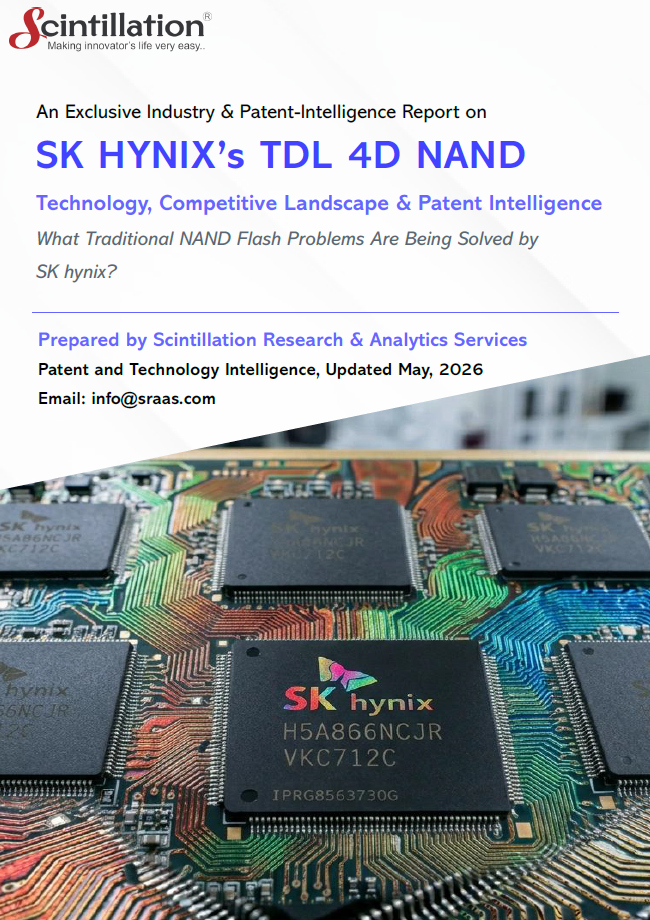
SK Hynix 321-Layer TLC 4D NAND — Patent Intelligence Report | Scintillation Research
Patent Intelligence Report  ·  Semiconductor Memory Series

SK Hynix 321-Layer TLC
4D NAND
Technology

A comprehensive technology and patent intelligence analysis of SK Hynix's most advanced next-generation flash memory platform — examining ultra-high-layer stacking, 4D NAND architecture, performance innovations, and the evolving intellectual property landscape across AI infrastructure, enterprise SSDs, and hyperscale data centers.

Report details

SK Hynix 321-Layer TLC 4D NAND — Technology & Patent Intelligence

Publisher Scintillation Research
Technology focus 321-Layer TLC 4D NAND
IP coverage Patent landscape + whitespace
Application verticals AI, enterprise, mobile, cloud
Standards coverage Next-gen NAND roadmap
Audience IP, R&D, Strategy, Investment
321L Stacking layers
4D NAND architecture
IP Patent landscape analysis
AI Infrastructure coverage
360° Competitive ecosystem view
Introduction

Why SK Hynix's 321-layer 4D NAND matters

The global semiconductor memory industry is rapidly evolving as demand increases for higher-capacity, faster, and more power-efficient storage technologies across AI, hyperscale data centers, enterprise computing, smartphones, and high-performance consumer electronics.

Modern AI workloads, cloud platforms, and high-resolution digital content require memory solutions capable of delivering higher storage density, faster read/write speeds, lower latency, improved energy efficiency, and greater reliability. However, conventional NAND flash technologies continue to face several technical limitations, including slower I/O performance, limited vertical stacking scalability, higher power consumption, thermal management challenges, and storage density constraints.

To address these challenges, SK Hynix is actively developing its 321-layer TLC 4D NAND technology as one of its most advanced next-generation flash memory platforms. The technology utilizes ultra-high-layer vertical stacking and advanced 4D NAND architectures to significantly improve storage density, performance, and power efficiency while supporting the growing demands of AI-driven and data-intensive computing environments.

Unlike traditional NAND architectures with scaling limitations, SK Hynix's advanced 4D NAND design enables more efficient cell integration and higher memory capacity within compact semiconductor footprints. The technology delivers improved read/write performance, lower energy consumption, higher stacking scalability, and enhanced reliability — making it highly suitable for enterprise SSDs, hyperscale AI infrastructure, mobile devices, and high-performance computing systems.

This report explores the technological foundations of SK Hynix's 321-layer TLC 4D NAND architecture, the key challenges it addresses, recent innovations, manufacturing developments, emerging applications, and the future commercialization potential of advanced NAND flash technology within the global semiconductor memory industry.

SK Hynix TLC NAND Technology

Key features & technical innovations

SK Hynix's 321-layer TLC 4D NAND converges ultra-high-layer stacking with next-generation cell architecture — unlocking a new class of storage density, speed, and power efficiency.

321-layer vertical stacking
Ultra-high-layer NAND cell stacking delivering industry-leading storage density within compact semiconductor footprints.
4D NAND architecture
Charge trap flash with peripheral circuitry under cell array (PUC) enabling more efficient integration than planar or early 3D designs.
High-speed I/O performance
Significantly improved read/write throughput and lower latency compared to conventional NAND architectures for data-intensive workloads.
Power-efficient operation
Reduced voltage requirements and optimized cell architecture enabling lower energy consumption per bit for mobile and hyperscale applications.
Manufacturing advancements
Advanced etching, deposition, and bonding processes enabling reliable high-layer count fabrication at commercial scale.
Enhanced reliability & endurance
Improved program/erase cycling endurance, data retention, and error correction capabilities suited for enterprise-grade deployments.
AI & data center optimization
Architecture tuned for the sequential and random access patterns of large-scale AI model training, inference, and hyperscale storage.
Scalability roadmap
Clear path toward even higher layer counts, enabling continued density scaling beyond 321 layers in future NAND generations.
Problems addressed

Limitations of traditional NAND technology

SK Hynix's 321-layer TLC 4D NAND directly targets five critical constraints that have held back conventional flash memory architectures.

01
Slower I/O performance
Conventional NAND architectures struggle to meet the throughput demands of AI workloads, real-time analytics, and cloud-native applications requiring sub-millisecond latency
Performance
02
Limited vertical stacking scalability
Earlier 3D NAND generations face process complexity, yield degradation, and reliability constraints as layer counts increase beyond practical thresholds
Scalability
03
Higher power consumption
Legacy NAND designs consume disproportionate power per operation, creating energy budget challenges for mobile devices and hyperscale data centers
Power
04
Storage density constraints
Planar and early 3D NAND architectures cannot efficiently deliver the bit density required by modern AI storage and high-capacity enterprise SSD applications
Density
05
Reliability challenges
Higher layer counts in conventional designs introduce thermal stress, cross-talk interference, and endurance degradation that limit deployment in mission-critical environments
Reliability
Report chapters

What each chapter covers

Eight substantive chapters connect technical innovation to intellectual-property strategy and commercial positioning across the NAND ecosystem.
01–02
Executive Summary & Purpose of the Report
Condensed findings, intended audience, and how to use the report as a strategic intelligence resource
Overview
03
Introduction — Challenges in Traditional NAND Technology
I/O bottlenecks, stacking scalability limits, power inefficiency, density constraints, and the imperative for 4D NAND advancement
Technical
04
SK Hynix's TLC NAND Technology — Features, Problems & Applications
321-layer architecture, 4D NAND cell design, performance specifications, manufacturing advances, and potential deployment verticals
Technical
05
Future Commercialization Outlook
Technology roadmap, deployment timeline, volume production milestones, licensing models, and value-chain positioning
Commercial
06
Patent Landscape Study — 7-Part Deep Dive
Methodology, assignee benchmarking, filing trends, jurisdiction mapping, technology segmentation, legal status, and whitespace analysis
IP Strategy
07
What This Means For You
Stakeholder-specific takeaways for R&D teams, IP counsel, business development, and investment professionals
Actionable
08–10
Conclusion, About Scintillation Research & Disclaimer
Synthesis of findings, research methodology, publisher profile, and full legal disclaimer
Reference

Download Your Sample Report Now:

    Application areas

    Potential application verticals

    The report examines deployment opportunities, technical requirements, and IP implications of 321-layer TLC 4D NAND across key industry verticals.

    AI Infrastructure
    Training clusters, inference servers, large-scale model storage
    Hyperscale Data Centers
    Cloud storage tiers, NVMe arrays, high-density flash deployments
    Enterprise SSDs
    Mission-critical storage, database acceleration, all-flash arrays
    Mobile Devices
    UFS storage for smartphones, tablets, and next-gen wearables
    High-Performance Computing
    Scientific simulation, financial modeling, genomics data pipelines
    Automotive & Edge AI
    ADAS storage, autonomous vehicle data logging, edge inference
    Consumer Electronics
    High-res video, gaming consoles, content creation devices
    Industrial & IoT
    Rugged storage for factory automation, sensors, and edge nodes
    Patent intelligence

    The 4D NAND patent landscape — a 7-part analysis

    The patent landscape chapter delivers a structured breakdown of the 4D NAND IP environment designed to support licensing strategy, competitive monitoring, and investment decisions.

    Filing & assignee intelligence
    • Methodology and patent database scope defining the search universe for 4D NAND
    • Who is filing — memory OEMs, fabless designers, equipment makers, and research institutions
    • Filing activity over time — trend analysis revealing acceleration points and technology maturity signals
    • Jurisdiction coverage — USPTO, KIPO, CNIPA, EPO, WIPO, and regional patent office distributions
    Technology & strategic analysis
    • Technology segmentation — how patents map to stacking, cell design, peripherals, and process innovations
    • Legal status snapshot — granted, pending, expired, and lapsed portfolio breakdown
    • Whitespace identification — unprotected technology areas representing strategic filing opportunities
    • Competitive positioning — SK Hynix portfolio benchmarked against Samsung, Micron, Kioxia, and Western Digital
    Purpose & audience

    Built for IP strategy and competitive positioning

    This report connects the technical foundations of SK Hynix's 321-layer TLC 4D NAND technology to the evolving intellectual-property landscape — enabling readers to understand not only the architecture and performance innovations, but also the strategic implications for patenting, licensing, competitive benchmarking, and investment decisions across the global semiconductor memory industry.

    Who will benefit

    Who should read this report

    R&D Strategists
    Technical teams tracking 4D NAND architecture, ultra-high-layer stacking, cell design, and next-generation flash memory development.
    IP Counsel & Patent Teams
    Attorneys and patent professionals assessing portfolio positioning, filing strategy, whitespace, and freedom-to-operate in advanced NAND.
    Business Development
    Licensing, partnership, and M&A teams evaluating NAND IP portfolios and commercialization opportunities across storage verticals.
    Technology Investors
    Investment professionals tracking the semiconductor memory ecosystem, competitive dynamics, and emerging IP positions in advanced NAND.
    Memory Industry Analysts
    Researchers and consultants mapping the competitive landscape across SK Hynix, Samsung, Micron, Kioxia, and emerging NAND players.
    Product & Procurement Teams
    Engineering and sourcing professionals evaluating 4D NAND for enterprise SSD, AI infrastructure, and mobile storage design-ins.
    Technology & Patent Intelligence · Scintillation Research

    Understand where advanced NAND technology is heading

    Get the complete technology and patent intelligence report on SK Hynix's 321-layer TLC 4D NAND — covering the full landscape from technical foundations to commercialization strategy.

    Scintillation Research · SK Hynix 321-Layer TLC 4D NAND · Patent Intelligence Series

    For a quick demo, schedule a meeting now!

    Service Demo Booking
    About

    About Scintillation Research

    Scintillation Research & Analytics Services is a specialized intellectual property and technology intelligence firm delivering patent analytics, technology scouting, competitive intelligence, and strategic research services. Through comprehensive patent and technology intelligence reports, we help organizations understand emerging innovations, identify market opportunities, monitor competitors, and make data-driven decisions across rapidly evolving technology domains.

    Shopping Cart (0 items)

    Subscribe to our newsletter

    Sign up to receive latest news, updates, promotions, and special offers delivered directly to your inbox.
    No, thanks
    Select your currency