Precision Microbiome Engineering

  • Home
  • Precision Microbiome Engineering
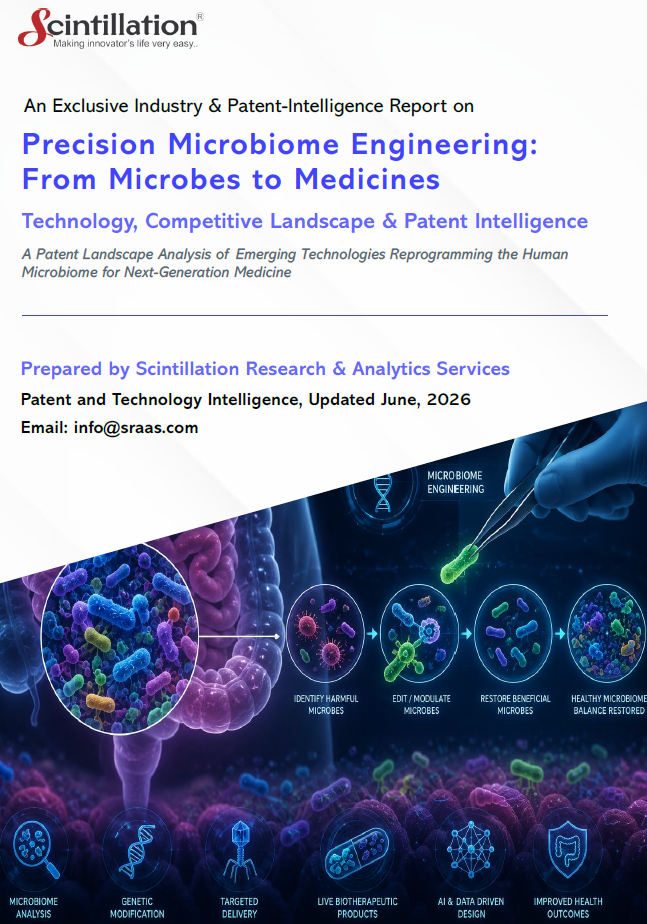
Precision Microbiome Engineering: A Patent Landscape Analysis of Emerging Technologies Reprogramming the Human Microbiome | Scintillation Research
Patent Intelligence Report  ·  Therapeutic Biotechnology Series

Precision Microbiome Engineering: Reprogramming the Human Microbiome for Next-Generation Medicine

A data-grounded look at who is filing, where innovation is concentrated, and why precision microbiome engineering is emerging as one of the most promising next-generation therapeutic platforms in modern medicine.

A comprehensive technology and patent intelligence analysis of Precision Microbiome Engineering — examining engineered probiotics, live biotherapeutic products, synthetic microbial consortia, bacteriophage-based therapeutics, microbiome diagnostics, microbiome-derived metabolites, and next-generation programmable microbial platforms enabling highly targeted and personalised therapies.

Engineered ProbioticsPrecision live therapeutics
BacteriophageTargeted microbial editing
Synthetic ConsortiaDesigned microbial communities
PatentLandscape & whitespace analysis

Report details

Precision Microbiome Engineering — Technology & Patent Intelligence Report

Publisher Scintillation Research
Technology Precision Microbiome Engineering
Focus area Therapeutic Biotechnology
Key segments LBPs, Bacteriophage, Consortia, Metabolites
IP coverage Patent landscape study
Applications GI, Oncology, Metabolic, Neurological Disease
Audience IP, R&D, Strategy, Investment
PME Precision microbiome engineering
38T Microbial cells in the human body
LBPs Live biotherapeutic products
IP Patent landscape study
Phage Targeted bacteriophage therapy
Introduction

When broad microbiome interventions can no longer meet the precision demands of next-generation medicine

Microbiome engineering aims to manipulate, control, and design community-level properties through targeted interventions of existing microbial communities or the construction of new synthetic consortia. These efforts often lead to unexpected or undesirable outcomes because of highly complex input-output relationships that are primarily ascribable to adaptive responses of interspecies interactions to perturbation.

The growing field of microbiome engineering seeks to administer microbial communities targeted for biodegradation, biosynthesis, and improving host health and function. In situ engineering of microbiomes is a major technological challenge due to the overwhelming complexity arising from the taxonomic and functional diversity of co-existing microbes, and the distinct and dynamic community structures associated with different environments and hosts.

The human microbiome plays a critical role in metabolism, immune regulation, neurological function, and overall health. Advances in next-generation sequencing, bioinformatics, synthetic biology, gene editing, and systems biology have significantly improved the understanding of host-microbiome interactions, enabling the development of engineered probiotics, synthetic microbial consortia, bacteriophage therapies, and microbiome-derived therapeutics.

Driven by growing evidence linking the microbiome to gastrointestinal, metabolic, inflammatory, oncological, neurological, and rare diseases, precision microbiome engineering is increasingly attracting academic, industrial, and investment interest. The convergence of microbiome science with genetic engineering, artificial intelligence, and computational biology is accelerating innovation and positioning the field as one of the most promising next-generation therapeutic platforms in modern medicine.

Report structure

Table of contents

Twelve chapters connecting precision microbiome engineering's technical foundations to patent landscape intelligence and commercialization strategy. Click any chapter to expand.

Condensed findings on precision microbiome engineering technology, patent filing trends, assignee dynamics, and strategic implications for next-generation therapeutic IP
Who Will Benefit from This Report — microbiome researchers, synthetic biology engineers, pharmaceutical strategists, IP counsel, and biotech investors tracking precision microbiome therapeutics
3.1 Limitations of Conventional Microbiome Interventions — broad-spectrum approaches of probiotics, prebiotics, antibiotics, and fecal microbiota transplantation, and why they fall short of precision medicine demands
Core Technologies of Precision Microbiome Engineering — engineered probiotics, live biotherapeutic products, synthetic microbial consortia, bacteriophage therapeutics, and programmable microbial platforms
4.1 Challenges Addressed by Precision Microbiome Engineering — colonization resistance, interspecies interactions, host variability, and complex input-output dynamics
4.2 Key Features of Precision Microbiome Engineering — targeted microbial modulation, strain-level specificity, genetic programmability, and personalised therapy design
4.3 Applications of Precision Microbiome Engineering — gastrointestinal, metabolic, inflammatory, oncological, neurological, and rare disease therapeutic areas
The technological trajectory from early probiotic and FMT approaches to synthetic biology-driven engineering, AI-guided consortia design, and next-generation programmable microbial platforms
Strategic signals — convergence with AI and synthetic biology, first regulatory approvals, growing evidence base, and precision microbiome engineering's positioning as a flagship next-generation therapeutic platform
Commercialization roadmap, regulatory pathway development, manufacturing scalability, and near-term deployment opportunities for precision microbiome therapeutic products
8.1 Methodology & Scope
8.2 Interesting Strategic Insights
8.3 Assignee Picture
8.4 Filing Activity Over Time
8.5 Jurisdiction Coverage
8.6 Technology Segmentation
8.7 Representative Publications Across the Field
8.8 Whitespace & Strategic Opportunities
Stakeholder-specific takeaways for microbiome researchers, synthetic biology engineers, pharmaceutical strategists, IP counsel, and biotech investors
Synthesis of precision microbiome engineering's technical trajectory, IP landscape dynamics, and strategic implications for next-generation therapeutic commercialization
Publisher profile, research methodology, and service overview — patent analytics, technology scouting, competitive intelligence, and strategic research across biotechnology domains
Full legal disclaimer covering information accuracy, IP ownership, and terms of use for this intelligence report
Precision Microbiome Engineering: Core Technologies

Core technologies & key features

Precision microbiome engineering moves beyond broad probiotic and prebiotic approaches to deploy genetically engineered microorganisms, designed microbial consortia, and targeted phage therapies that can selectively modulate the gut ecosystem at species, strain, and gene-circuit levels.

Engineered probiotics
Genetically modified microbial strains programmed to sense disease signals, produce therapeutic compounds, or remodel host-microbiome interactions in situ.
Live biotherapeutic products (LBPs)
Defined microbial preparations — single strains or communities — developed under pharmaceutical-grade regulatory frameworks for the treatment of specific diseases.
Synthetic microbial consortia
Rationally designed communities of multiple microbial strains engineered to cooperate and fill defined functional niches within the host microbiome.
Bacteriophage-based therapeutics
Viruses that infect and destroy specific bacterial pathogens with high selectivity — enabling targeted elimination of harmful microorganisms while sparing beneficial flora.
Microbiome diagnostics & analytics
Sequencing, metagenomics, and AI-driven analysis platforms that characterize the composition and functional state of a patient's microbiome to guide personalised therapeutic design.
Microbiome-derived metabolites
Bioactive compounds produced by gut microbiota — including short-chain fatty acids, bile acid derivatives, and neuroactive molecules — harnessed or engineered as therapeutic agents.
Gene-circuit programming in microbes
Synthetic gene circuits embedded in engineered strains that detect environmental signals and respond with precisely timed or conditional therapeutic outputs.
Programmable microbial platforms
Next-generation chassis organisms and computational tools enabling the iterative design, testing, and optimisation of microbiome engineering strategies.
Challenges addressed

Why conventional microbiome interventions cannot meet the precision demands of modern medicine

Precision microbiome engineering directly targets the ecological, predictability, and efficacy constraints that limit what conventional, broad-spectrum microbiome interventions can achieve.

01
Colonization resistance & engraftment failure
Introduced microorganisms often fail to establish persistently in an existing microbiome, outcompeted by resident communities. Engineered strains and rationally designed consortia are built to overcome colonization barriers and achieve stable engraftment
Engraftment
02
Unpredictable interspecies dynamics
The highly complex interactions between thousands of microbial species make it difficult to predict how a given intervention will affect the broader community. AI-driven interaction modeling and systems biology approaches are working to improve the predictability of microbiome responses
Predictability
03
Lack of strain-level specificity
Broad antibiotics and non-engineered probiotics act without species- or strain-level discrimination, causing collateral disruption to beneficial microbial populations. Bacteriophage therapies and engineered strains target specific organisms with far greater selectivity
Specificity
04
Host variability & personalisation
Microbiome composition varies substantially between individuals, making fixed interventions ineffective across patients. Microbiome diagnostics and AI-guided therapy design enable personalised treatment strategies matched to each patient's unique microbial profile
Personalisation
05
Manufacturing & regulatory complexity
Live microbial therapeutics present manufacturing challenges around stability, viability, and batch consistency, and regulatory pathways for novel engineered organisms are still maturing. The emerging live biotherapeutic product framework is providing clearer pathways for clinical and commercial development
Manufacturing
Technology evolution

From broad interventions to programmable microbial platforms

Precision microbiome engineering's trajectory traces a progression from non-specific dietary and microbial interventions to genetically programmable living therapeutics guided by AI-driven microbiome analytics.

Foundational era
Probiotics, prebiotics, and fecal microbiota transplantation
Early microbiome interventions established the concept of microbiome modulation for health, but relied on broad, poorly defined microbial communities without species- or strain-level precision.
Characterization advances
Next-generation sequencing & metagenomics
High-throughput sequencing enabled comprehensive characterization of the human microbiome, revealing its diversity, functional roles, and associations with specific disease states.
Targeted engineering
Engineered probiotics & bacteriophage therapeutics
Synthetic biology tools enabled the engineering of probiotic strains with defined therapeutic functions, while refined phage therapies offered precise bacterial targeting without broad antimicrobial activity.
Regulatory maturation
Live biotherapeutic product framework & first approvals
Emerging regulatory frameworks for live biotherapeutic products provided clearer pathways for clinical development, and the field's first regulatory approvals validated the platform's commercial potential.
AI convergence
AI-guided consortia design & programmable microbial platforms
Machine learning and systems biology tools are enabling the rational design of synthetic consortia and gene-circuit-programmable strains, pointing toward fully personalised, adaptive microbiome therapies.
Why precision microbiome engineering is a technology to watch

Strategic signals driving renewed attention

Several converging trends are elevating precision microbiome engineering from an emerging research field to one attracting significant pharmaceutical, regulatory, and investment attention.
01
First regulatory approvals validating the platform
Recent regulatory approvals of microbiome-based products have established precedents and provided confidence for further clinical and commercial investment.
02
Convergence with AI and synthetic biology
AI-guided microbiome analytics and synthetic biology tools are dramatically accelerating the pace of therapeutic design and reducing the time from discovery to clinical candidate.
03
Expanding disease associations
Growing clinical evidence linking the microbiome to oncology, neurology, metabolic disease, and autoimmunity is opening large new addressable therapeutic markets.
04
Precision medicine tailwind
The broader shift toward personalised, patient-specific treatment strategies aligns strongly with precision microbiome engineering's data-driven, individualised approach.

Download Your Sample Report Now:

    Application areas

    Where precision microbiome engineering creates therapeutic impact

    Precision microbiome engineering's disease-modifying potential is most compelling across the conditions where the microbiome has been most directly linked to pathology and where current treatments leave the most significant unmet need.

    Gastrointestinal Disease
    Inflammatory bowel disease, Clostridioides difficile infection, and other GI conditions with established microbiome links
    Oncology
    Microbiome modulation to improve immunotherapy response and manage treatment-related dysbiosis
    Metabolic Disease
    Obesity, type 2 diabetes, and non-alcoholic fatty liver disease where microbiome-derived metabolites influence host metabolism
    Inflammatory & Autoimmune Disease
    Rheumatoid arthritis, psoriasis, and other immune-mediated conditions linked to disrupted gut-immune communication
    Neurological Disease
    Gut-brain axis interventions targeting Parkinson's disease, depression, anxiety, and autism spectrum disorder
    Rare & Orphan Diseases
    Metabolic and genetic conditions where engineered microbial strains producing therapeutic compounds represent a viable pathway
    Infectious Disease
    Bacteriophage therapies targeting drug-resistant bacterial pathogens as a complement to conventional antimicrobial approaches
    Preventive & Wellness Medicine
    Microbiome profiling and engineered consortia designed to maintain health and prevent disease onset across the lifespan
    Who will benefit

    Who should read this report

    Microbiome & Synthetic Biology Researchers
    Scientists designing engineered probiotics, synthetic microbial consortia, and bacteriophage therapies for next-generation microbiome therapeutics.
    Pharmaceutical Strategists
    Strategy professionals evaluating precision microbiome engineering as a drug-discovery and therapeutic-development platform and assessing competitive dynamics.
    IP Counsel & Patent Teams
    Attorneys and patent professionals assessing portfolio positioning, whitespace, freedom-to-operate, and filing strategy across engineered microorganism, phage, and microbiome-analytics technologies.
    Clinical & Regulatory Affairs Teams
    Teams navigating the evolving regulatory landscape for live biotherapeutic products and engineered microbial therapeutics.
    Biotech & Life Science Investors
    Investment professionals tracking the precision microbiome ecosystem, the IP landscape, and emerging companies in engineered probiotics, phage therapy, and microbiome analytics.
    R&D Strategists & Industry Analysts
    Researchers and consultants mapping the competitive precision microbiome landscape across pharmaceutical companies, biotechnology firms, and academic institutions driving adoption.
    Technology & Patent Intelligence · Scintillation Research

    Understand who is building the IP foundation for precision microbiome therapeutics

    Get the complete technology and patent intelligence report on Precision Microbiome Engineering — from engineered probiotics and bacteriophage therapeutics to the patent landscape revealing who is filing, where innovation is concentrated, and why precision microbiome engineering is emerging as one of the most promising next-generation therapeutic platforms in modern medicine.

    Scintillation Research · Precision Microbiome Engineering · Patent Intelligence Series

    For a quick demo, schedule a meeting now!

    Service Demo Booking
    About

    About Scintillation Research

    Scintillation Research & Analytics Services is a specialized intellectual property and technology intelligence firm delivering patent analytics, technology scouting, competitive intelligence, and strategic research services.

    Through comprehensive patent and technology intelligence reports, we help organizations understand emerging innovations, identify market opportunities, monitor competitors, and make data-driven decisions across rapidly evolving technology domains. Our reports are designed for professionals at the intersection of technology strategy, IP management, and competitive intelligence.

    Shopping Cart (0 items)

    Subscribe to our newsletter

    Sign up to receive latest news, updates, promotions, and special offers delivered directly to your inbox.
    No, thanks
    Select your currency