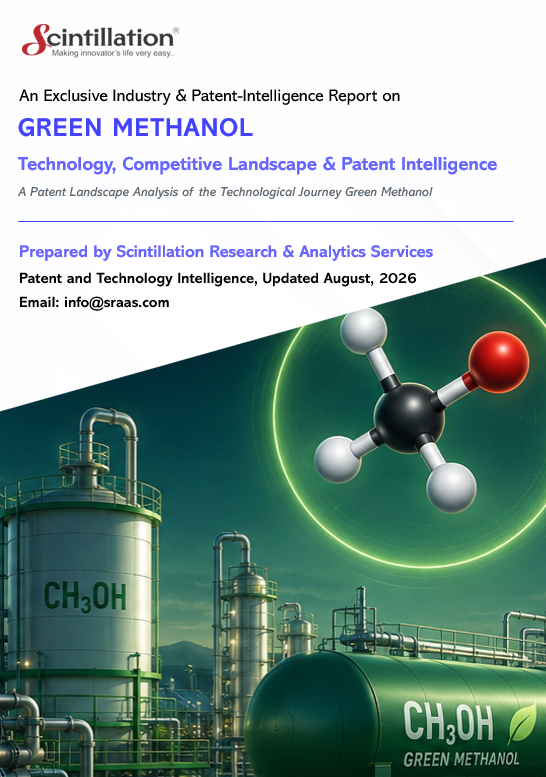
Green Methanol

Technology & Innovation Landscape Analysis  ·  Clean Fuels Series

A Low-Carbon Fuel and Chemical Platform: How Green Methanol Is Reshaping Shipping and Industry

A data-grounded look at who is investing, where technology and commercial activity are concentrated, and what it means for project development and strategic positioning.

e-methanolGreen hydrogen and captured CO₂
Bio-methanolBiomass pathways
Marine fuelShipping decarbonization
LandscapeCapacity & whitespace

Report details

Green Methanol — Technology & Innovation Landscape Analysis Report

PublisherScintillation Research
TechnologyGreen Methanol
Focus areaRenewable and low-carbon methanol
Key segmentse-methanol, Bio-methanol, Carbon Capture, Synthesis
Landscape coverage8-part landscape study
AudienceStrategy, Shipping, IP, Investment
Purpose of the report

Mapping a next-generation low-carbon fuel and feedstock

This report examines the emergence of green methanol as a next-generation low-carbon fuel and chemical feedstock platform. It reviews the scientific and engineering foundations, production pathways, competitive and applications landscape, and the market and innovation trends shaping the sector, showing who is investing, where technology and commercial activity are concentrated, and what that means for future research, project development, and strategic positioning.

It covers core production technologies, leading companies and technology licensors, capacity and investment trends, technology evolution, applications across shipping and industry, competitive dynamics, whitespace, and the outlook for renewable and low-carbon methanol.

Who will benefit from this report

Built for everyone shaping the green methanol market

Each audience gets a clear view of the landscape and what to do with it.

01
Corporate Strategy & Business Development
Leading producers, technology licensors, capacity trends, and geographic hotspots to support partnership, investment, and market-entry decisions.
02
Investors & Market Analysts
An evidence-based view of market sizing, capacity growth, commercialization trends, and leading companies.
03
Shipping Lines, Ports & Marine Fuel Suppliers
Insight into supply availability, technology pathways, bunkering infrastructure needs, and regulatory drivers.
04
IP Professionals & Technology Licensing Teams
A view of innovation activity and leading technology holders across e-methanol and bio-methanol pathways for FTO and licensing work.
05
Energy, Chemicals & Process Engineering Companies
Competitive intelligence on electrolysis, carbon capture, biomass gasification, and methanol synthesis technologies.
06
Policymakers & Regulatory Bodies
Context on how emissions rules, fuel mandates, and carbon pricing shape investment and deployment.
Introduction

From fossil methanol and legacy marine fuels to a renewable alternative

Methanol is a widely used chemical and an increasingly attractive liquid fuel, but most of it today is made from fossil sources. Green methanol is produced from renewable inputs, either from renewable hydrogen combined with captured carbon dioxide (e-methanol) or from sustainable biomass (bio-methanol). Because it is a liquid at ambient conditions, it is easier to store and handle than many alternative fuels, which makes it a leading option for decarbonizing shipping and a lower-carbon feedstock for industry.

Report structure

Table of contents

Twelve chapters, from green methanol fundamentals to landscape intelligence. Click any chapter to expand.

—Key findings on green methanol, leading companies and licensors, capacity trends, and strategic implications
—Who Will Benefit from This Report
3.1Limitations of Conventional (Fossil-Based) Methanol and Legacy Marine Fuels
—Core Components of Green Methanol Production Systems
4.1Challenges Addressed by Green Methanol
4.2Key Features of Green Methanol
4.3Applications of Green Methanol
—How green methanol production has progressed from pilots to commercial-scale projects
—The regulatory, commercial, and technology signals that make the sector strategically important
—Scale-up pathways, infrastructure needs, and future directions for renewable and low-carbon methanol
8.1Methodology & Scope
8.2Interesting Strategic Insights
8.3Assignee Picture
8.4Capacity and Investment Growth Over Time
8.5Jurisdiction Coverage
8.6Technology Segmentation
8.7Representative Technologies and Projects Across the Field
8.8Whitespace & Strategic Opportunities
—Stakeholder-specific takeaways for strategy teams, investors, shipping, IP professionals, industry, and policymakers
—Synthesis of the technology trajectory, market dynamics, and strategic implications
—Overview of Scintillation Research and its patent and technology intelligence services
—Legal disclaimer covering information accuracy, IP ownership, and terms of use
Core components & key features

What a green methanol production system is made of

From renewable inputs to finished methanol.

Renewable power & electrolysis
Electrolyzers that use renewable electricity to produce green hydrogen for e-methanol.
Carbon capture & CO₂ supply
Captured or biogenic carbon dioxide that serves as the carbon source.
Biomass gasification
Converting sustainable biomass into synthesis gas for bio-methanol.
Methanol synthesis
Catalytic reactors that convert hydrogen and carbon into methanol efficiently.
Storage & distribution
Liquid handling at ambient conditions that suits existing infrastructure and bunkering.
Low-carbon, versatile output
One product that serves as both a fuel and a chemical building block.
Challenges addressed

Limits of fossil methanol and legacy marine fuels

What green methanol aims to address, and the barriers to scale.

01
Emissions from fossil-based methanol
Conventional methanol carries a significant carbon footprint from its fossil feedstock
02
Decarbonizing shipping
Legacy marine fuels are high in emissions, and regulation is pushing shipping toward cleaner options
03
Need for a practical, storable low-carbon fuel
A liquid fuel that works with existing storage and handling can ease the transition
04
Cost, feedstock, and infrastructure barriers
Renewable power, carbon sources, project financing, and bunkering infrastructure all limit how fast supply can scale
Applications

Where green methanol creates value

Fuel and chemical uses that need a lower-carbon option.

Marine fuel for shipping
Ports and bunkering
Chemical feedstock
Industrial applications
Renewable and low-carbon fuels
Landscape study

Who is investing, where, and in which technologies

The study covers methodology and scope, strategic insights, the assignee picture, capacity and investment growth over time, jurisdiction coverage, technology segmentation across electrolysis, carbon capture, biomass, and synthesis, representative technologies and projects, and the whitespace and strategic opportunities for new projects, licensing, and partnerships.
Request Your Sample Report Now!

    For a quick demo, schedule a meeting now!

    Shopping Cart (0 items)

    Subscribe to our newsletter

    Sign up to receive latest news, updates, promotions, and special offers delivered directly to your inbox.
    No, thanks