
For years, the beauty industry has focused mainly on the ingredients in formulas (such as peptides, ceramides, retinoids, and antioxidants). But perhaps the real breakthrough won’t be the ingredient itself, but rather its composition.
Most of today’s creams and lotions are still made using a system developed decades ago: small oil droplets suspended in water. This traditional method remains effective, stable, and widely used. However, a shift is happening in formulation labs.
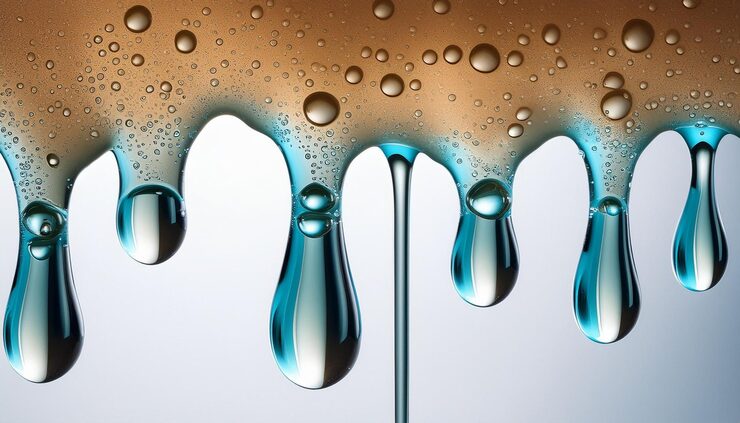
Scientists are redesigning formulas to create a water droplet (microscopic in size) suspended in a continuous oil phase. This new type of formula is called “Reverse Emulsion” (Water-in-Oil Systems). It may be one of the most underrated technical innovations in modern skin care.
Reverse Emulsions
An emulsion is a mixture of two liquids that normally do not mix because of differences in their molecular structures (such as oil and water), stabilized by emulsifiers.
In the traditional Emulsion System (Oil-in-Water System):
- Oil droplets are suspended in an aqueous solution (water).
- The product is light and quickly absorbed into the skin.
- As a result, the water evaporates quickly after application.
In a Reverse Emulsion (Water-in-Oil):
- Tiny water droplets are suspended in a continuous, viscous oil.
- The first thing the product touches on the skin is the oil.
- The water is suspended in the oil and thus will take longer to evaporate and/or be released from the skin than the way the traditional emulsion would perform.
Reverse Emulsions not only flip the Formula, but also re-engineer the Delivery System.
What Could This Mean for the Future?
As we keep developing new and innovative ways to create products, we might see the following:
- Hybrid emulsion systems that provide targeted release areas/ease of use.
- Personalized formulations/textures that support barriers.
- Structures designed with AI optimization.
- Climate-adaptive emulsions.
- High performance in dermatological applications.
The opportunity here isn’t simply returning to oil and water. But rather, rethinking the very foundation in which skincare interacts with skin biology.
Patent Filings: A Growing Indicator of Innovation Momentum
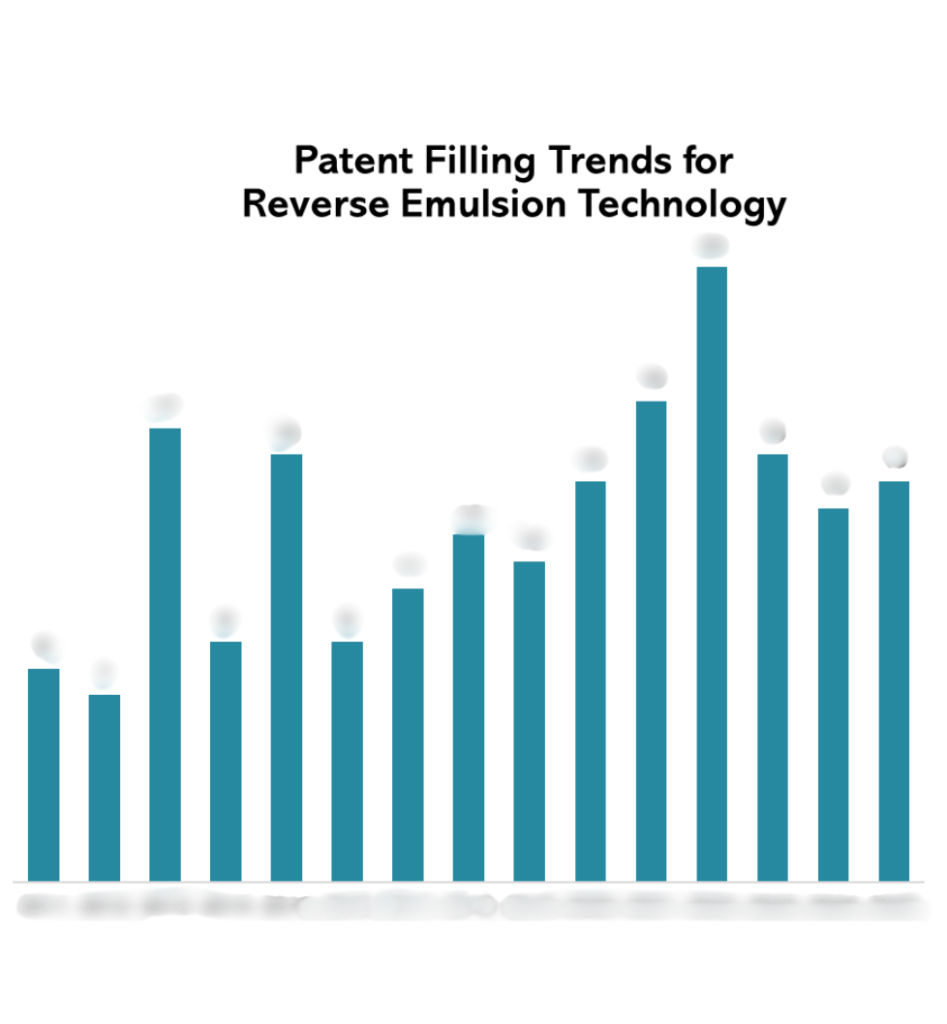
In emerging technology sectors, patent activity is one of the earliest and most dependable indicators of long-term industry commitment. When formulators, cosmetic giants, and research institutions invest in intellectual property, they’re not just experimenting; they’re claiming territory. Over the past few years, patent filings related to water-in-oil systems, structural delivery innovations, and reverse emulsion architectures have shown a clear upward trend. The highest number of patent filings occurred in 2022.
Get the complete report @ THE REVERSE EMULSION RESEARCH REPORT
Conclusion
When it comes down to beauty innovation, we don’t always add more ingredients to achieve a particular result. There are times when we will change the way we design our products to get better results. Reverse emulsions challenge traditional thinking in cosmetic formulation by changing the way we design our products with water and oil; new opportunities for product hydration, stability, barrier performance, and sensory experience arise.
While reverse emulsions won’t necessarily replace the traditional emulsions we currently use, they will certainly influence the way in which we think about intelligent formulations. And that shift is structural, not superficial.
Get complete report @ THE REVERSE EMULSION RESEARCH REPORT
