
Zero-Knowledge Proof (ZKP) Banking System: Why Is Customer Privacy Still Compromised in KYC and Transaction Validation Processes?
A look at how zero-knowledge proof technologies can be implemented in traditional banking environments to minimise data exposure while preserving necessary verification and auditing capability.
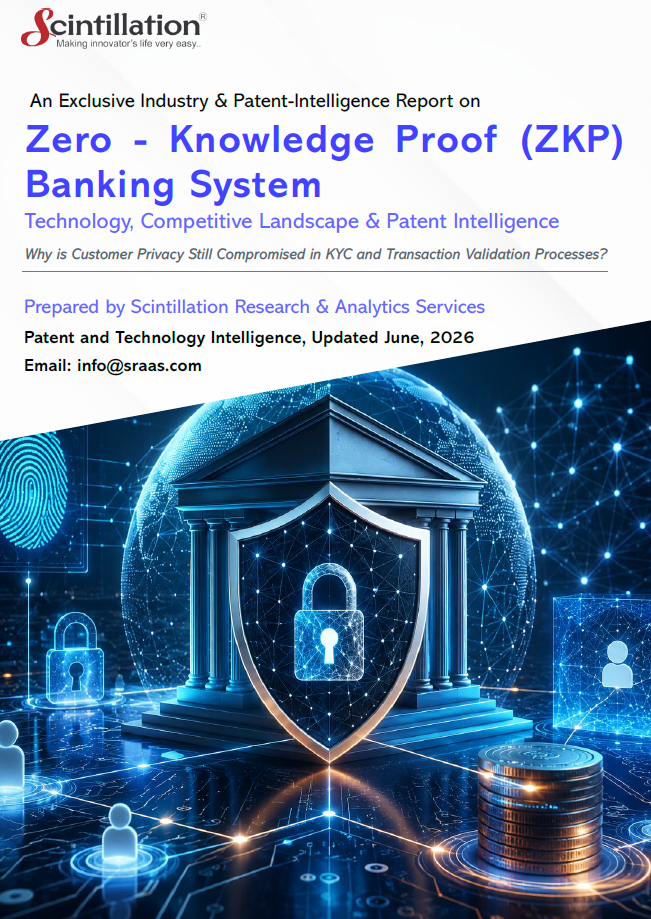
A comprehensive technology analysis of Zero-Knowledge Proof Banking Systems — examining how ZK technologies can be applied to account opening, deposit and withdrawal transactions, fund transfers, and regulatory compliance, enabling a next-generation banking model where customer data exposure is minimised without compromising the verification and auditing processes banks require.
Report details
Zero-Knowledge Proof (ZKP) Banking System — Technology & Strategy Intelligence Report
When proving compliance no longer requires exposing everything
Imagine walking into a bank and being asked for your entire financial history just to prove you have enough funds for a simple transaction. Now imagine if you could verify your balance without ever showing your actual bank statements. Wouldn't you feel safer knowing your private financial data isn't being stored or shared? That's exactly what Zero-Knowledge Proofs (ZKPs) make possible.
For decades, financial regulations have required extreme transparency, forcing banks to collect and store vast amounts of personally identifiable information in the name of compliance. The result has been massive data breaches, with hackers stealing millions of financial records every year. Financial exclusion has worsened, as 1.4 billion adults remain unbanked due to rigid KYC requirements. Regulatory overreach has also expanded, giving governments and institutions unprecedented access to financial data.
The financial system has long operated under the assumption that compliance requires exposure. But ZKPs rewrite the rulebook, proving compliance without revealing sensitive data. In banking, ZKPs allow customers to verify their identity without sharing personal details. Banks can prove AML compliance without revealing transaction histories. Financial institutions can confirm liquidity reserves without exposing balance sheets. It's compliance without surveillance, security without intrusion, and privacy without compromise.
Think of ZKPs as a sealed envelope with a hidden answer inside. A verifier can shake the envelope, feel its shape, and confirm that the answer is correct — without ever opening it.
Table of contents
Ten chapters connecting ZKP banking's technical foundations to practical use cases, comparative analysis, and forward-looking strategy. Click any chapter to expand.
Structural components & key features
A ZKP banking system layers cryptographic proof generation and verification onto existing or blockchain-based banking infrastructure — allowing a customer or institution to prove a statement is true without revealing the underlying data that makes it true.
Why the conventional banking system cannot meet today's privacy expectations
ZKP banking directly targets the structural assumption that compliance requires exposure — addressing the data-collection and surveillance burdens built into conventional KYC, AML, and transaction-validation processes.
From conventional disclosure to zero-knowledge verification
Core banking use cases — account opening, deposits and withdrawals, transfers, and audits and regulation — can each be reimagined through a zero-knowledge approach, becoming more secure and privacy-focused without sacrificing the verification banks require.
Traditional banking system vs zero-knowledge proof (ZKP) banking system
A side-by-side view of how a ZKP-based approach differs from the data-disclosure model that underpins most banking verification today.
| Dimension | Traditional Banking System | Zero-Knowledge Proof (ZKP) Banking System |
|---|---|---|
| Data exposure | Full identity, balance, and transaction data shared and stored | Only the validity of a specific claim is proven; underlying data stays private |
| Identity verification | Document submission and manual or automated review of full records | Cryptographic proof of identity attributes without document disclosure |
| Compliance model | Compliance achieved through broad data access and retention | Compliance achieved through verifiable proofs, minimizing data retention |
| Breach exposure | Centralized data stores represent high-value attack targets | Reduced sensitive data footprint lowers the impact of potential breaches |
| Financial inclusion | Rigid documentation requirements can exclude underserved populations | Flexible attribute-based proofs may lower barriers to verified access |
| Infrastructure compatibility | Built primarily for centralized core banking systems | Applicable to both blockchain-based and traditional banking infrastructure |
Download Your Sample Report Now:
Where ZKP banking creates critical privacy impact
ZKP's privacy-preserving verification is most valuable in applications where conventional disclosure-based processes create unnecessary data exposure, breach risk, or barriers to access.
Who should read this report
Understand how zero-knowledge proofs can redefine banking privacy
Get the complete technology and strategy report on Zero-Knowledge Proof Banking Systems — from account opening and transfers to AML compliance and audits, examining how ZK technologies can deliver compliance without surveillance, security without intrusion, and privacy without compromise.
For a quick demo, schedule a meeting now!
About Scintillation Research
Scintillation Research & Analytics Services is a specialized intellectual property and technology intelligence firm delivering patent analytics, technology scouting, competitive intelligence, and strategic research services.
Through comprehensive patent and technology intelligence reports, we help organizations understand emerging innovations, identify market opportunities, monitor competitors, and make data-driven decisions across rapidly evolving technology domains. Our reports are designed for professionals at the intersection of technology strategy, IP management, and competitive intelligence.
